Spray tanning in Georgetown.
Colour without a single minute of UV exposure, matched to your natural tone rather than sprayed at one generic setting. Twenty minutes in the studio, seven to ten days of even colour, and no sun damage to pay for later.
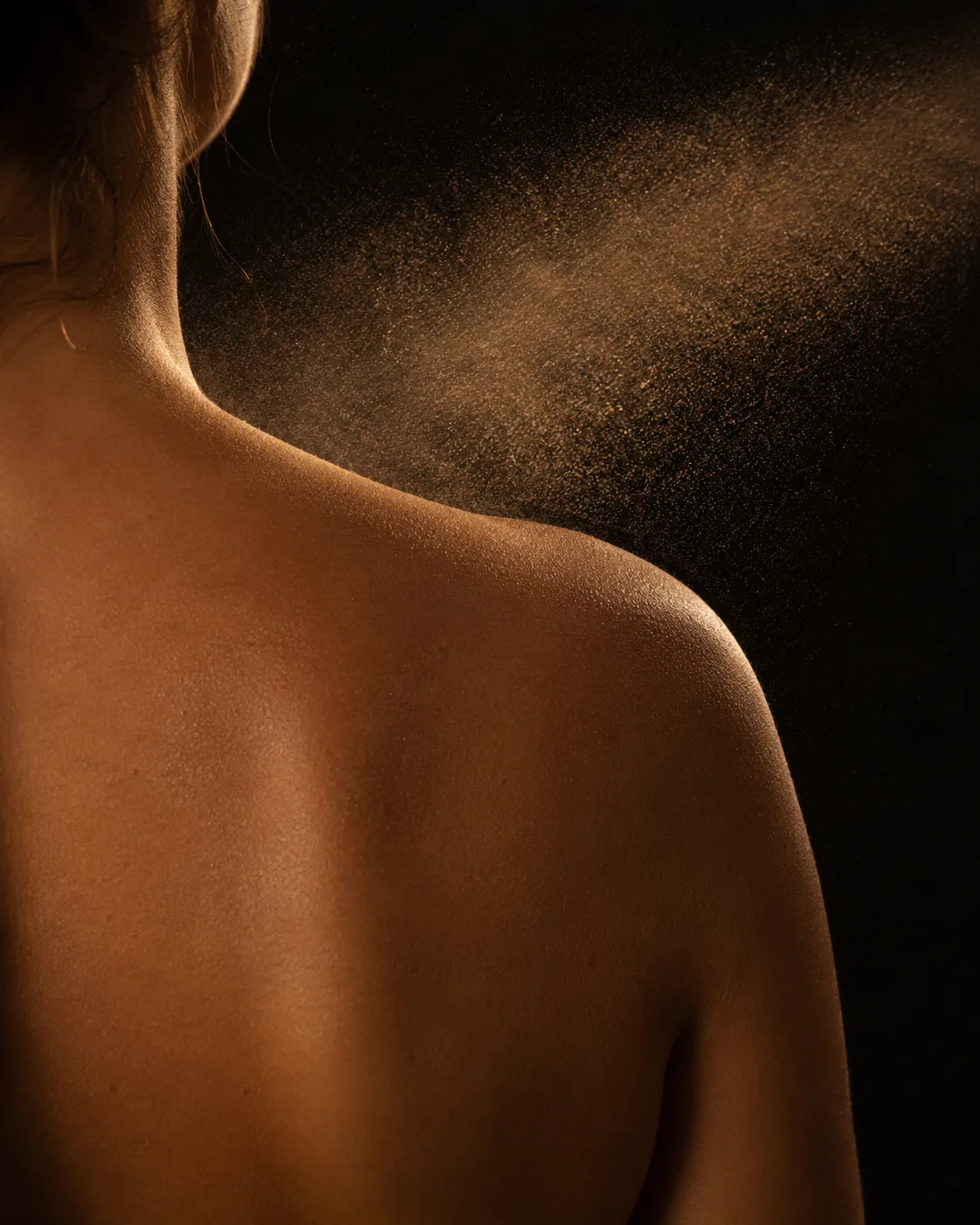
A reaction on the surface, not a tan.
Understanding this one fact explains every rule about preparation and aftercare, and it explains why a spray tan cannot damage your skin the way a sunbed does.
The active ingredient is DHA — dihydroxyacetone, a sugar derived from sugar cane or beets. It reacts with amino acids in the dead cells on the outermost surface of your skin and produces a brown pigment. The reaction is called the Maillard reaction, and it is the same chemistry that browns bread crust.
Nothing penetrates into living skin. There is no melanin response, no DNA damage and no UV involved at any stage. A sunbed produces colour by injuring your skin until it defends itself with pigment; a spray tan produces colour by staining cells that are already dead and on their way off your body.
It also explains the aftercare. Your tan lives in the layer of skin you are constantly shedding, so anything that speeds up shedding — hot water, chlorine, salt, exfoliating, long baths — takes the colour with it. Anything that keeps that layer intact and hydrated makes it last.
Almost every bad spray tan is a preparation problem.
Tan after your laser session, never before.
This is the most consequential thing on the page and it is worth being blunt about. A spray tan must be completely gone before a laser hair removal session — allow a clear two weeks.
Laser hair removal works by targeting pigment. It is designed to find the melanin in your hair follicle and heat it. DHA pigment sitting across the whole surface of your skin gives the laser a false target spread over the entire treatment area, which means surface heating instead of follicle heating. That is how burns and lasting pigment changes happen.
A technician who treats over a spray tan is either not asking or not listening. Sukh asks every time, and if you have tanned recently the appointment gets moved at no cost. The correct order is always laser first, tan afterwards — and if you are doing both regularly, book the tan for the week after a session rather than the week before the next one.
Two completely different things.
About spray tanning.
How does a spray tan actually work? +
The active ingredient is DHA, a sugar derived from sugar cane or beets. It reacts with amino acids in the dead cells on the very surface of your skin to produce a brown pigment. Nothing penetrates, nothing is absorbed into the living skin, and no UV is involved at all — which is the entire point compared with a sunbed.
How long does it last? +
Seven to ten days for most people. Because the colour lives in the outermost layer of skin, it fades as those cells shed naturally. How long you keep it depends almost entirely on aftercare: moisturising daily extends it, hot baths, swimming pools, saunas and exfoliating shorten it considerably.
Will it look orange? +
Not when the solution is matched to your skin tone. Orange results come from a solution that is too dark for the skin it is applied to, or from applying to unprepared skin so the colour grips unevenly. Sukh matches the depth to your natural tone and builds gradually for first-time clients rather than going straight to the darkest option.
How do I prepare? +
Exfoliate and shave twenty-four hours before, not the same day — freshly shaved pores are open and grip colour unevenly. Arrive with completely clean skin: no moisturiser, deodorant, makeup or perfume, all of which act as a barrier and cause patches. Wear loose dark clothing to leave in.
When can I shower? +
Follow the timing you are given for the solution used, typically between four and eight hours. Your first rinse is warm water only with no soap and no scrubbing — the water will run brown, which is the cosmetic bronzer washing off, not your tan. The real colour keeps developing for around twenty-four hours.
Can I have a spray tan before laser hair removal? +
No, and this one is important. A spray tan must be completely gone before a laser session — allow two weeks. The laser targets pigment, and DHA sitting on the surface of your skin gives it a false target, which risks burns and pigment change. Always tan after your laser session, never before.
Can I have one if I am pregnant? +
Many people do, since nothing is absorbed beyond the surface layer of dead skin. That said, DHA has not been formally studied in pregnancy and you will be in a tented space, so raise it at your consultation — and it is always reasonable to ask your own doctor first.
What about a spray tan with microneedling or a facial? +
Never on freshly needled skin — wait at least a week after microneedling. A HydraFacial should come before the tan, not after, since exfoliating the face afterwards simply removes the colour you paid for.
Colour, matched to you.
First time? Sukh will start lighter than you expect and build from there. It is far easier to go darker next time than to wait out a tan that is too deep.