HydraFacial in Georgetown.
Cleanse, extract and hydrate in one thirty-minute treatment, with skin that looks better walking out than it did walking in. No peeling, no redness to hide, no recovery — which is why it is the treatment clients book before a wedding, a shoot or a birthday.
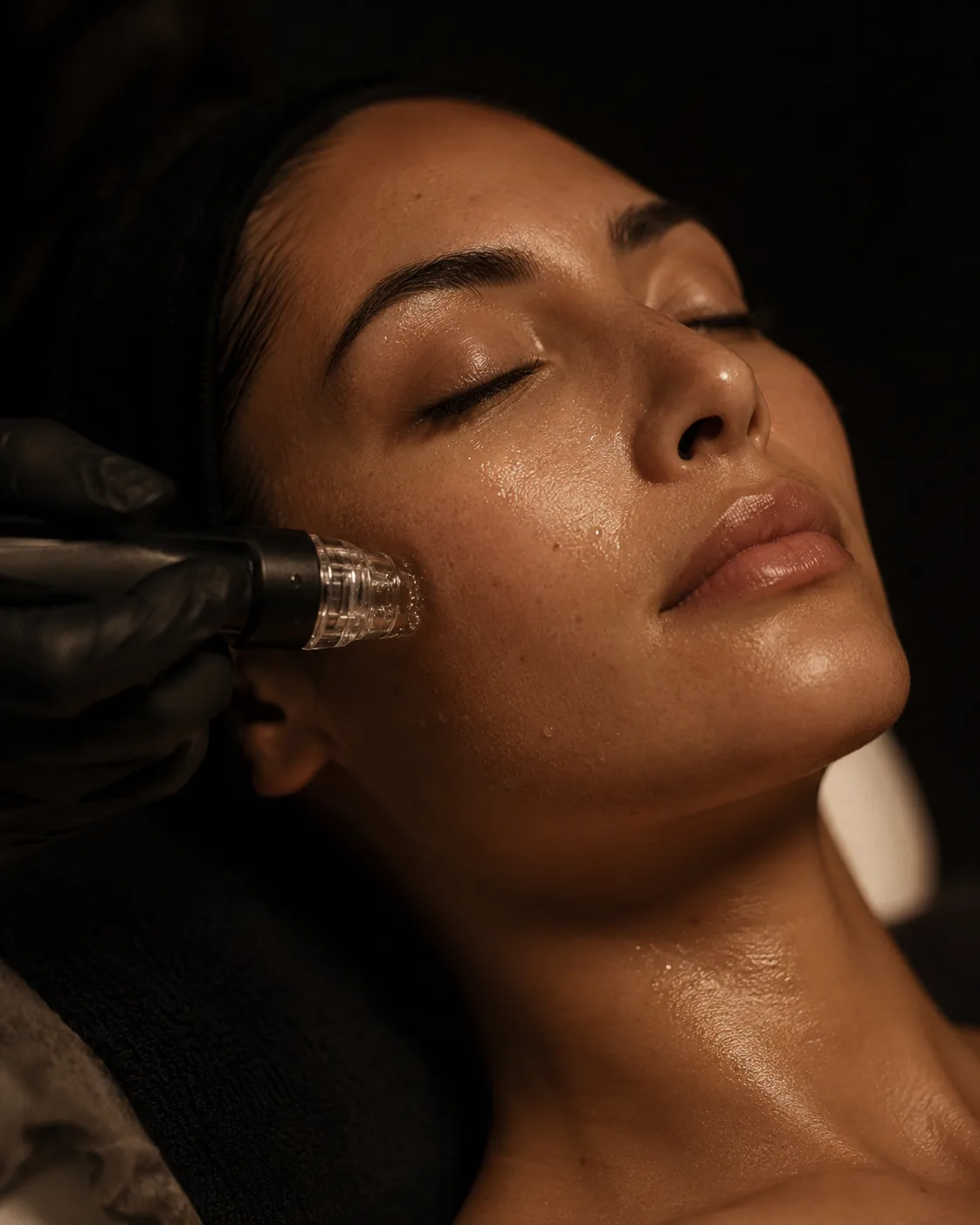
Three stages, one pass, thirty minutes.
It is not a traditional facial with a new name. A single handpiece does three jobs in sequence, and the middle one is the reason people keep coming back.
The treatment with nothing to recover from.
Most treatments that visibly change your skin ask for something in return — a week of peeling after a chemical peel, two days of redness after microneedling, a month of purging after a new retinoid. A HydraFacial asks for nothing. You leave with skin that looks hydrated and even, and you can put makeup on in the car.
That is not a small thing. It makes the treatment genuinely bookable in real life: on a lunch break, the day before an event, or as a monthly habit that never inconveniences you. It is also why it is the most common first treatment for people who have never had professional skincare done and are nervous about it.
What it will not do is replace a medical treatment. It will not clear cystic acne, it will not remove deep wrinkles, and it will not fade significant pigmentation on its own. For texture, congestion, dullness and dehydration — the things most people actually mean when they say their skin looks tired — it is close to ideal.
Honest about what it does and does not fix.
What can share a day, and what cannot.
This matters more than most clinics admit, and getting it wrong is how people end up with irritated skin and blame the treatment.
About HydraFacial.
What actually happens during a HydraFacial? +
Three stages through one handpiece. First a gentle exfoliation and resurfacing peel to lift dead surface skin. Then painless vortex extraction — a vacuum tip that draws out blackheads and sebum from the pores without the pinching of manual extractions. Finally the skin is flooded with hydrating serums containing hyaluronic acid, peptides and antioxidants while they are still able to absorb.
Does it hurt? +
No. It feels like a cool brush moving over your face with a light tugging sensation during the extraction stage. There is no stinging and no heat. Most clients find it the most relaxing treatment in the studio.
Is there any downtime? +
None, which is the main reason people choose it. Your skin will look plumper and brighter immediately and you can wear makeup the same day. It is the standard choice before a wedding, a photograph or an event — book it three to five days ahead for the best result.
How is it different from a regular facial? +
A traditional facial relies on steam, manual extraction and the therapist’s hands. A HydraFacial uses a device that cleanses, extracts and infuses serums in a single controlled pass, so results are more consistent and the extraction stage is far more comfortable. It also reaches a depth that hands alone cannot.
How often should I have one? +
Once a month suits most skin. That interval matches the roughly twenty-eight day cycle of skin cell turnover, so each treatment works on genuinely new surface skin. For a specific concern like congestion or dullness, a course of three to six spaced four weeks apart produces a visible change rather than a temporary glow.
Will it help my acne or congestion? +
It helps a great deal with congestion, blackheads and the dull, rough texture that comes with them, because the extraction stage clears the pore itself. Active inflammatory acne and cystic acne are different — those need a dermatologist, and Sukh will say so rather than sell you a course of facials that will not touch them.
Can I have it with laser hair removal? +
Yes, but not on the same area on the same day. Both treatments leave the skin surface temporarily sensitised, and stacking them raises the risk of irritation for no extra benefit. Facial laser and a HydraFacial should sit at least a week apart. Legs or underarms on the same day as a HydraFacial is completely fine.
Is it safe for sensitive skin or rosacea? +
Usually yes, at adjusted settings and with the serum selection changed. The peel strength is dialled down and the more active boosters are skipped. Tell Sukh at your consultation — sensitive skin is a reason to adjust the treatment, not to avoid it.
Glowing skin, same day.
The consultation is free. Sukh will look at your skin honestly and tell you whether a HydraFacial is the right treatment for what is actually bothering you.